When a two-part mold?
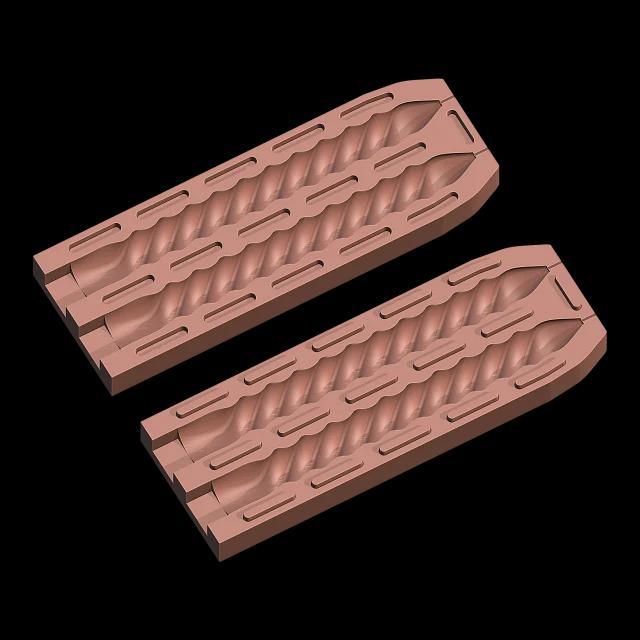
- The candle is patterned all round and has no flat back.
- It is long and thin and breaks when pulled from a one-piece mold.
- You want several candles from one mold.
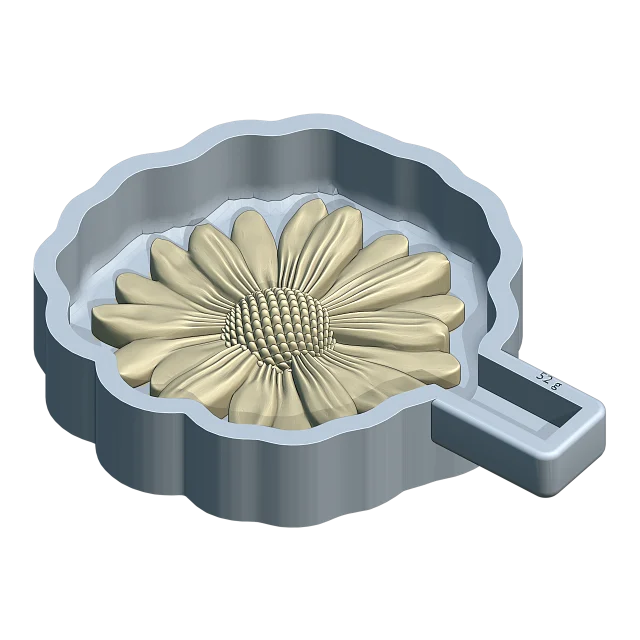
For a flat-backed candle or a relief a one-piece tray is easier; for a wide candle with a flat base a box that follows the model is enough.
Flat-backed candles and wax melts: How to make a silicone tray mold →
A figure that needs more than two parts: How to make a multi-part silicone mold →
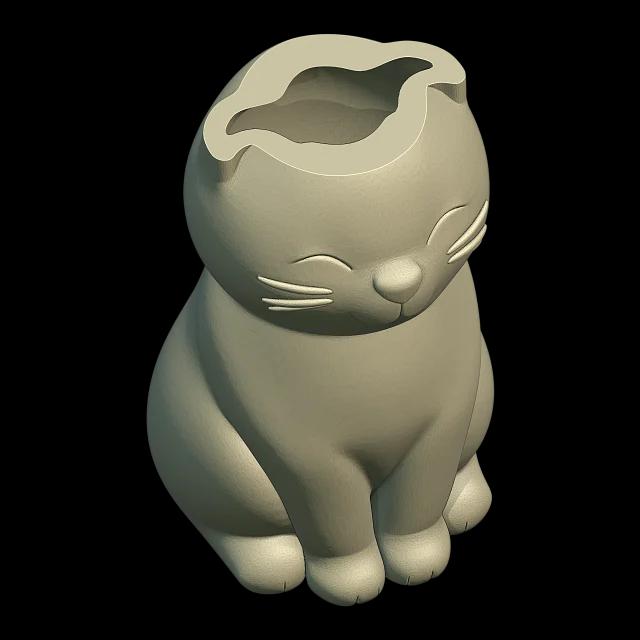
A candle holder with a hollow: How to make a silicone mold with an inner core →
1. Decide the parting face
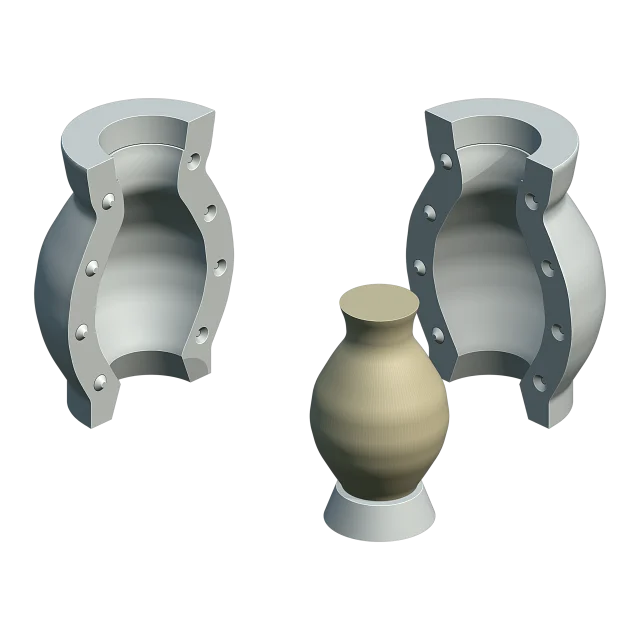
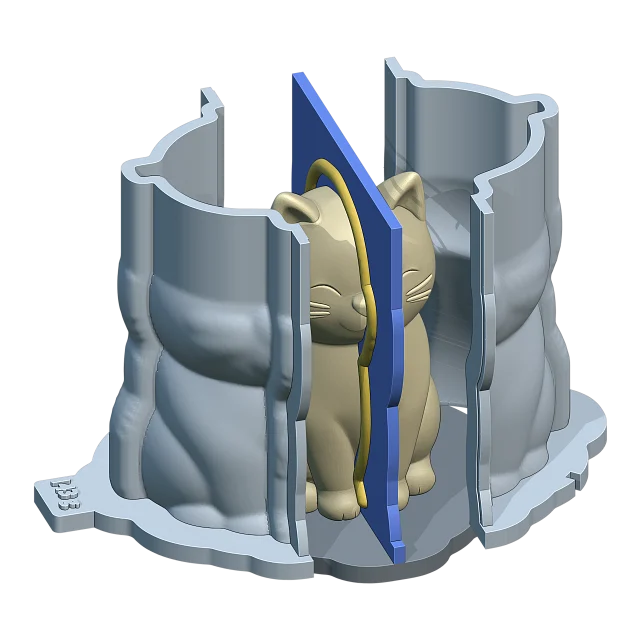
The two halves meet on an upright plane through the candle's axis. The seam leaves a fine line on the candle, so it should run along the two sides where it shows least. Even on a twisted candle a plane through the axis lets both halves pull straight off.
2. Choose the keys and the thickness
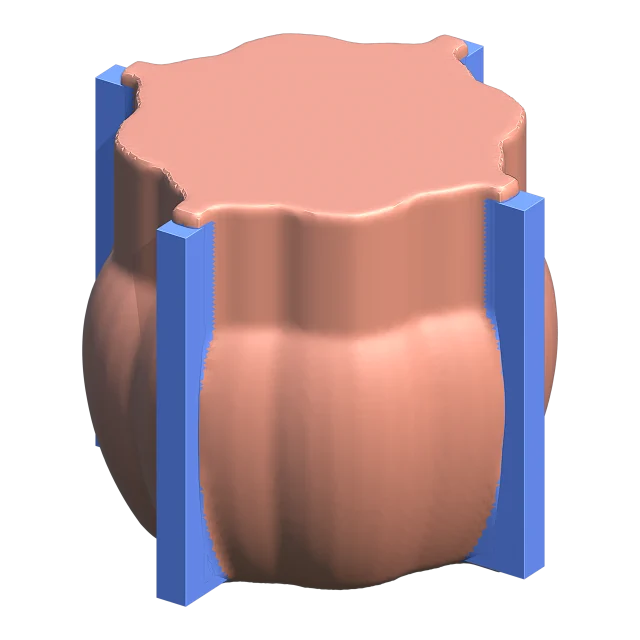
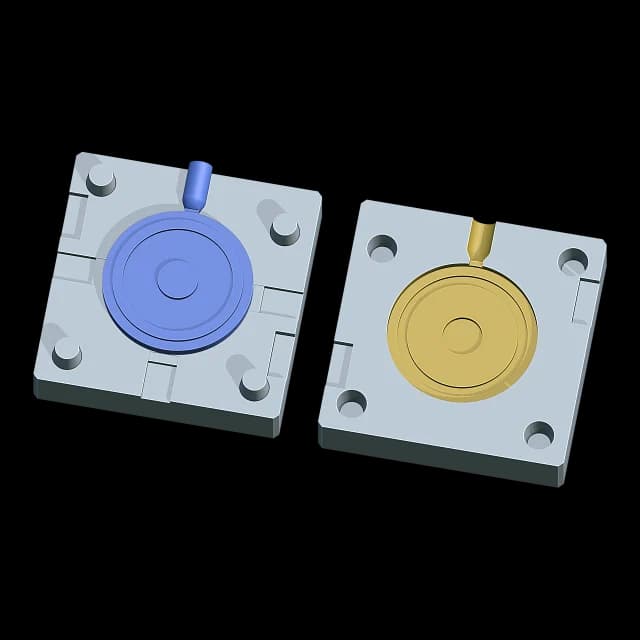
The halves must not slide as they close. Male keys stand on one half and slightly larger sockets in the other, so the halves close only the right way.
- Long bar keys: run along the cavities and stop leaks too.
- Round studs: in dense rows, handy on small molds.
- About 8 mm of silicone round the candle keeps a thin half from bending while you cast.
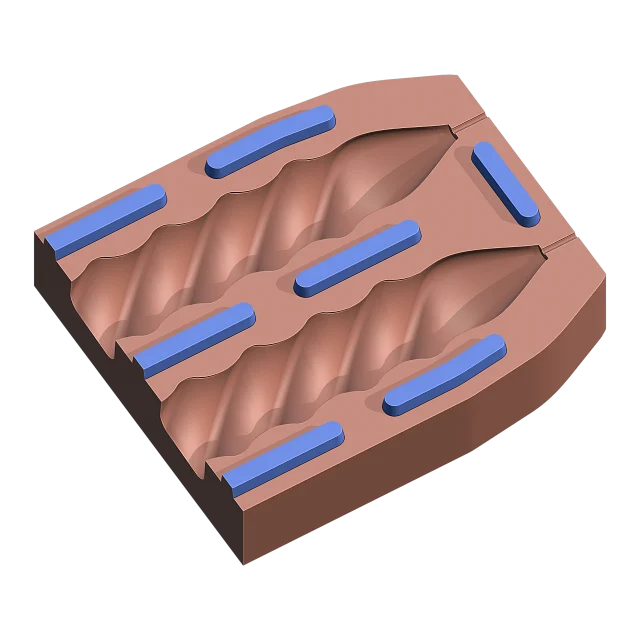
In Cage Mold: Key Type is Barrier (bars) or Pin (studs), 5 mm; the sockets are 0.5 mm larger on each axis. Mold Thickness is 8 mm for this type.
3. Open the pour opening and the wick channel
The wax goes in through an opening at one end of the mold, usually the candle's base. A small reservoir over it feeds the candle as the wax shrinks while cooling, and is cut off afterwards.
The wick runs through a thin channel out of the candle's tip. When the channel holds the wick snugly, no wax leaks out there.
In Cage Mold: Open Bottom opens the cavity at the candle's base, Reservoir adds a 15 mm square pour head, Wick Channel runs a 1.5 mm channel out of every tip.
4. Pour each half in its own box
Each silicone half is poured in its own printed box, parting face down. The halves never touch while they cure, so silicone sticking to silicone is no problem; no release agent is needed between them.
- Print the boxes and seat them on their bases.
- Weigh and mix the silicone and degas it.
- Fill both boxes to the rim.
- Once cured, take the halves out and close them on their keys.
To save silicone, the back of a half can follow the cavities instead of being flat; the half is then cast under a printed lid, which holds it while you cast.
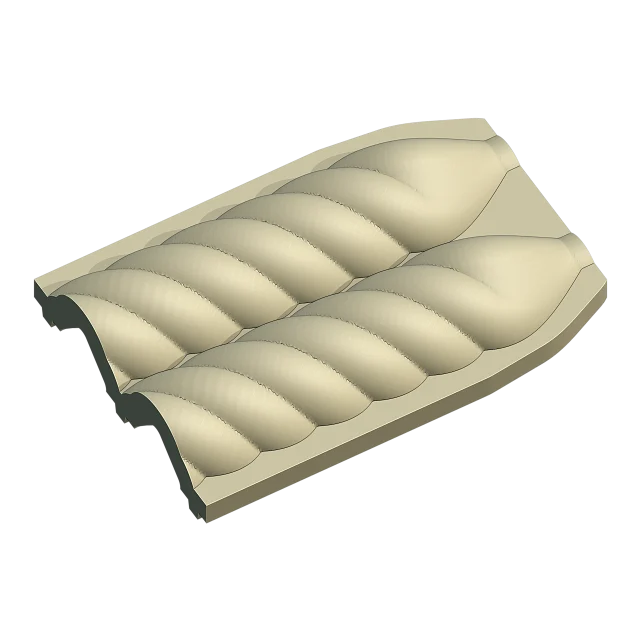
In Cage Mold: Back is Flat or Contoured (about a third less silicone). With Cavities, 1 to 8 candles fit in one row in the same mold.
5. Pour the wax
- Thread the wick through the channel and hold it taut over the pour opening.
- Stand the closed mold upright, opening up, with the halves pressed firmly together.
- Pour the wax slowly through the opening, at the temperature its maker gives.
- If the reservoir sinks as the wax cools, top it up.
- When it is fully cold, open the mold and cut off the reservoir and the spare wick.
Rubber bands or a cage round the halves keep the mold from opening and leaking while you cast.
In Cage Mold (Pro): the Casting Box is a cage for this type. Each half sits in a tray, ring or claw clamps squeeze them, and a wick bar on the tray keeps the wick centred in every cavity.
How much silicone do you need?
Type in the model's size; the calculator gives the silicone's volume, weight and the A/B amounts.